


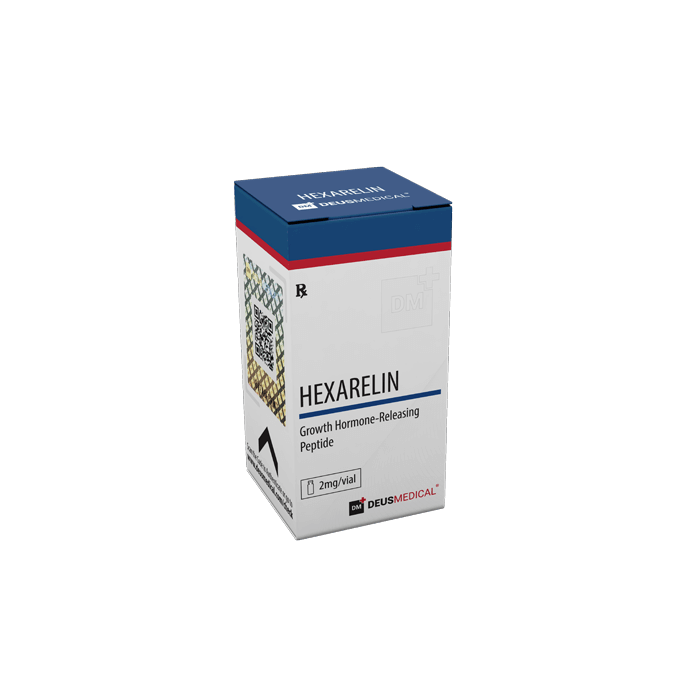
Hexarelin | Hexarelin Peptide
Price range: $15.00 through $25.00
Hexarelin, also known as Examorelin, is a synthetic GH releasing hexapeptide, which activates growth hormone secretagogue receptor (GHSR) in the brain area. It is also ghrelin analog, similarly to other peptides such as GHRP-6. Beyond GH release and neuroendocrine effects, hexarelin might have also direct cardiovascular actions and cardioprotective effects. Compared with ghrelin, this peptide is chemically more stable and functionally more potent, therefore it could be potential future therapeutic medium. It can also improve fat measures and protect muscles.
| Quantity |
(2mg x 10 Vials) ,(5mg x 10 Vials) |
|---|
Hexarelin
Hexarelin peptide is a powerful growth hormone secretagogue with multiple potential benefits, from muscle growth and fat loss to joint support and anti-aging effects. However, it should be used responsibly and with medical supervision due to potential side effects and legal restrictions.
When sourced from reputable suppliers and administered properly, Hexarelin can be a valuable tool for those looking to enhance recovery, performance, and overall wellness.
Hexarelin Dosage and Administration
Hexarelin is usually administered via subcutaneous injection. While dosing can vary, a common protocol is:
-
Dose: 200–300 mcg per day
-
Cycle length: 4–6 weeks, followed by a rest period to avoid GH receptor desensitization
It’s often used once daily, but some protocols split the dose into two smaller injections for sustained GH release.
Hexarelin Peptide
Hexarelin peptide is a synthetic growth hormone-releasing peptide (GHRP) known for its ability to stimulate the pituitary gland to release more growth hormone (GH). This makes it a popular compound in the fitness, wellness, and anti-aging industries. While it shares similarities with other peptides like GHRP-6 and Ipamorelin, Hexarelin stands out for its potency and specific benefits.
What is Hexarelin?
Hexarelin, which is sometimes called Examorelin, is made up of six amino acids and is called a hexapeptide. A growth hormone secretagogue is something that binds to ghrelin receptors in the body and makes GH come out. It was first studied to see if it could help treat low levels of growth hormone and heart problems.
Hexarelin can raise GH levels even in older people, while natural GH production goes down with age. This makes it a good choice for people who want to lose fat, build muscle, and speed up the healing process.
Hexarelin side effects || Hexarelin benefits
Hexarelin can have negative effects, much like any other bioactive molecule. Some of the most common ones are:
Holding on to water
More hunger
Joint pain
Tingling or numbness in the hands and feet
In very rare situations, using a lot of it for a long time can make the GH receptor less sensitive, which makes it less effective. You should cycle Hexarelin and not use it all the time.
Hexarelin stimulates the pituitary gland and hypothalamus, causing an increase in natural growth hormone production. Growth hormone plays a crucial role in:
-
Muscle tissue repair
-
Fat metabolism
-
Bone density
-
Skin health
-
Energy levels
It also has cardioprotective properties, potentially helping in heart tissue regeneration after injury.
Benefits of Hexarelin Peptide
1. Muscle Growth and Recovery
Increased GH levels from Hexarelin can accelerate muscle repair, making it popular among athletes and bodybuilders for post-workout recovery and lean mass gains.
2. Fat Loss
GH plays a role in lipolysis—the breakdown of stored fat. Users often report a noticeable reduction in body fat over time.
3. Anti-Aging Effects
By boosting GH, Hexarelin can improve skin elasticity, collagen production, and overall vitality, helping combat visible signs of aging.
4. Joint and Connective Tissue Support
Growth hormone helps with cartilage regeneration and joint health, making Hexarelin appealing to individuals with sports injuries or age-related wear.
5. Cardiovascular Health
Research suggests Hexarelin may improve heart function and aid recovery after cardiovascular injury due to its effect on cardiac tissue repair.
Buy Hexarelin Peptide Online || Where To Buy Hexarelin Peptide
Want to buy Hexarelin peptide online? We sell Hexarelin that is very pure and of research quality for use in labs and science. Our peptides are made to very high standards, so you may be sure that your research will get accurate findings.
Hexarelin peptide should be kept in a cool, dry environment to stay as stable as possible. If you want to keep it for a long time, put it in the fridge at 2–8°C. After you mix it up, put it in the fridge and utilize it within the time limit that is suggested.
Enjoy the ease of safe online ordering and fast shipping. You may buy with confidence since your Hexarelin peptide comes from a trusted provider that cares about quality and dependability.
Why should you buy Hexarelin Peptide from us?
Third-party testing shows that it is at least 99% pure.
Safe delivery in a secure, private package
Reliable providers ship quickly all around the world.
Only for research purposes—do not eat.
We only work with labs that are GMP-certified to make sure that the quality control and batch uniformity are as high as possible.
Description of Hexarelin
A synthetically produced peptide hexarelin was developed in the early 1990s by Italian pharmaceutical company Mediolanum Farmaceutici as a part of research aimed to find compounds able to stimulate the release of GH from pituitary gland. From that time it was a part of numerous researches for example on cardiostimulating and cardioprotecting effects. There was also anti-atherosclerotic activity of hexarelin observed in particular rat study, where this peptide suppressed formation of atherosclerotic plaques and neointima. Hexarelin also decreased calcium sedimentation specifically in aortic wall, and decreased cholesterol levels in obese rats. Let us now bring you some more information on hexarelin research topics.
[13]
Research Confirmed Effects
1. Hexarelin in Heart Protection
Hexarelin has shown cardioprotective effects in rat models of myocardial ischemia/reperfusion (I/R) injury achieved through binding to growth hormone secretagogue receptor (GHSR) and receptor CD36. Treatment with hexarelin showed improvements in cardiac systolic function, a decreased level of malondialdehyde (a marker for oxidative stress), and a greater number of surviving cardiomyocytes compared to those treated with saline. The beneficial effects of hexarelin treatment were also shown to be slightly superior to those of equimolar ghrelin treatment.
Another study focused on the impact of hexarelin on male ghrelin-knockout mice after myocardial infarction, providing further evidence of its cardioprotective properties. Hexarelin significantly reduced the mortality rate within 2 weeks compared to a control group, and improved various cardiac function parameters, such as ejection fraction and peak rates of pressure rise and decline. This effect on cardiac function, along with reduced heart cell death, was achieved by binding to GHSR and preventing apoptosis. Moreover, hexarelin treatment was also here shown to be more effective than ghrelin treatment in terms of heart function improvements.
In a study investigating its therapeutic role, rats with CAL-induced heart failure were treated with subcutaneous injections of hexarelin or saline. The results showed that hexarelin treatment significantly improved LV function, reduced oxidative stress, and ameliorated myocardial remodeling.
In both mouse and rat models of heart disease a study examining its impact on myocardial infarction (MI), hexarelin treatment resulted in improved left ventricular function, reduced cardiac fibrosis, and a decrease in interstitial collagen deposition. This cardioprotective effect was also observed in spontaneously hypertensive rats (SHRs), where hexarelin treatment reduced left ventricular hypertrophy, improved cardiac function, and lowered blood pressure. The mechanism behind these benefits appears to be related to hexarelin’s ability to modulate the expression of growth hormone secretagogue receptor (GHSR) and its impact on collagen synthesis and degradation.
Hexarelin’s effects on cardiac function and fibrosis are accompanied by a shift from sympathetic to parasympathetic nervous system activity, leading to lower heart rates and reduced blood pressure. This shift helps reduce myocardial remodeling and supports overall cardiac health.
[1] – [5]
2. Hexarelin and Its Cardioprotective Effects in Diabetic Rats
Thus hexarelin has demonstrated significant cardioprotective effects in various models of heart disease, whereas in one study, it was shown to improve cardiomyocyte function in streptozotocin-induced diabetic rats. This improvement was achieved by reversing changes in cardiomyocyte contraction and intracellular calcium ([Ca2+]i) transients, which are commonly disrupted in diabetic conditions. Additionally, hexarelin treatment corrected the abnormal action potential duration and transient outward potassium current (Ito) density seen in diabetic cardiomyocytes. The treatment was also associated with antiapoptotic changes, with upregulated GHSR expression and altered expression of apoptosis-related proteins, such as Bax, Bcl-2, caspase-3, and caspase-9. This suggests that hexarelin may hold therapeutic potential for managing cardiac dysfunction in diabetic patients.
3. Hexarelin and Improved Fat Measures
Hexarelin seems to haveo potential also in improving lipid metabolic aberrations in nonobese insulin-resistant male mice. In a study mice were given twice-daily intraperitoneal injections of hexarelin for 12 days, resulting in notable improvements in glucose and insulin tolerance, alongside decreased plasma and liver triglycerides. These benefits are thought to be connected to hexarelin’s ability to enhance adipocyte differentiation and improve lipid metabolism in white adipose tissue. Although hexarelin-treated mice exhibited increased food intake, it did not affect their total body weight. In fact, hexarelin treatment was associated with decreased fat mass and increased lean mass, suggesting that it corrected the abnormal body composition often linked to insulin resistance and metabolic syndrome.
4. Hexarelin and Muscle Protection
Furthermore, the peptide has been found to protect skeletal muscle from mitochondrial damage in rat models of cisplatin-induced cachexia, a common side effect of cancer chemotherapy. Cachexia is characterized by weight loss and muscle atrophy, and cisplatin treatment can cause a decrease in mitochondrial biogenesis, mass, and fusion index, along with increased oxidative stress. Studies showed that hexarelin could reverse these detrimental effects by antagonizing chemotherapy-induced mitochondrial dysfunction. This suggests that targeting mitochondrial health might be an effective strategy to mitigate muscle wasting in cachexia.
In addition to its impact on mitochondria, hexarelin has also demonstrated beneficial effects in preventing dysregulation of skeletal muscle calcium homeostasis in rat models. This dysregulation contributes to muscle atrophy and is associated with altered calcium signaling pathways. Cisplatin-treated rats displayed reduced muscle weight, smaller fiber diameter, increased intracellular calcium levels, and decreased calcium transients. Hexarelin treatments helped normalize calcium homeostasis, preserving muscle function and reducing atrophic indicators.
Related products
HGH Fragment 176-191
$40.00
IGF-1 DES
$65.00
IGF-1 LR3 | IGF-1 LR3 Peptide
$60.00
KPV Peptide 5MG
$35.00
MK-677 (Ibutamoren)
$75.00
Mod GRF 1-29 (CJC-1295 no DAC)
Price range: $310.00 through $605.00
Reviews
There are no reviews yet.