


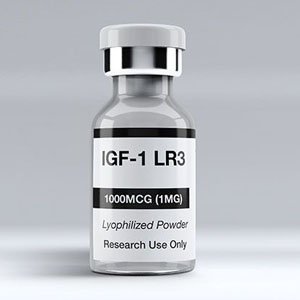
IGF-1 LR3 | IGF-1 LR3 Peptide
$60.00
| Quantity |
(1mg x 10 Vials) |
|---|
Buy IGF-1 LR3 Peptide : Premium Research Peptides for Scientific Investigation
Research into insulin like growth factors has revealed the significant potential of IGF-1 LR3 Peptide as a powerful tool for investigating cellular mechanisms and growth pathways. This synthetic analog of human insulin like growth factor represents a breakthrough in peptide research, offering scientists enhanced stability and potency compared to naturally occurring compounds. For researchers seeking to buy igf 1 lr3 of exceptional quality, understanding both the molecular characteristics and practical applications becomes essential for successful experimental outcomes.
The modified version of IGF-1 has garnered attention across multiple research domains, from muscle growth studies to investigations of cell proliferation and protein synthesis mechanisms. Unlike its natural counterpart, IGF-1 LR3 demonstrates remarkable resistance to degradation while maintaining consistent bioactivity throughout extended experimental periods. This enhanced stability profile makes it an invaluable research tool for scientists studying growth factor pathways and their effects on various tissues and cells.
Molecular Structure of IGF-1 LR3
The molecular architecture of IGF-1 LR3 reflects sophisticated bioengineering designed to overcome the limitations of natural insulin like growth factor compounds. This synthetic analog features a distinctive 13-amino acid N-terminal extension combined with an arginine substitution at position 3, replacing the original glutamic acid residue. These structural modifications fundamentally alter the peptide’s interaction with igf binding proteins, resulting in increased potency and extended biological activity.
Key Molecular Specifications:
| Property | Value |
|---|---|
| Amino Sequence | Long Arginine 3 modification of human IGF-1 with 13-amino acid N-terminal extension |
| Molecular Formula | C423H684N122O128S7 |
| Molecular Weight | 9117.60 g/mol |
| PubChem CID | 56841671 |
| CAS Number | 946870-92-4 |
The long arginine modification at the n terminus creates a peptide that demonstrates significantly different pharmacokinetic properties compared to native IGF-1. Research has shown that this structural alteration reduces binding affinity to IGF-binding proteins while maintaining high-affinity interactions with IGF-1 receptors. The resulting compound exhibits a longer half life of approximately 20-30 hours, representing a dramatic improvement over the brief 10-minute duration of natural IGF-1 activity in vitro.
Studies examining the molecular behavior of this peptide have demonstrated that the arginine substitution and extended amino acid chain work synergistically to create a more potent and stable research compound. The molecular weight of 9117.60 g/mol reflects the additional amino acids incorporated into the structure, while the complex molecular formula indicates the sophisticated arrangement of carbon, hydrogen, nitrogen, oxygen, and sulfur atoms that comprise this advanced peptide.
Mechanism of Action of IGF-1 LR3 Peptide
IGF-1 LR3 Peptide operates through high-affinity binding to IGF-1 receptors, initiating complex cellular signaling cascades that regulate fundamental biological processes including cell growth, protein synthesis, and fat metabolism. Upon receptor binding, the compound activates multiple intracellular pathways, primarily the Ras-MAPK and PI3K/Akt/mTOR signaling networks. These pathways coordinate diverse cellular responses ranging from cell proliferation to metabolic adaptations that researchers study extensively in laboratory settings.
The enhanced potency of IGF-1 LR3 stems from its reduced interaction with IGF-binding proteins, which normally sequester and inactivate growth factors in biological systems. Research suggests that this low affinity for binding proteins allows more free peptide to remain available for receptor activation, producing more pronounced and sustained cellular responses compared to natural insulin like growth factors. This characteristic makes IGF-1 LR3 particularly valuable for researchers investigating growth factor signaling mechanisms and their downstream effects.
Primary Signaling Pathways:
- Ras-MAPK Pathway: Regulates cell proliferation and differentiation responses
- PI3K/Akt/mTOR Network: Controls protein synthesis, cell survival, and metabolic functions
- Metabolic Signaling: Influences glucose uptake and fatty acid oxidation in target tissues
The longer half life of IGF-1 LR3 provides researchers with consistent experimental conditions over extended periods, eliminating the need for frequent compound administration that could introduce variables into study protocols. This stability allows for more precise measurements of cellular responses and enables researchers to study both acute and chronic effects of growth factor stimulation in various experimental models.
Research has demonstrated that IGF-1 LR3 can stimulate both hypertrophy and hyperplasia in skeletal muscle cells, offering scientists a unique tool for investigating muscle repair mechanisms and growth factor efficacy. The compound’s ability to influence nutrient partitioning and cellular metabolism makes it valuable for studies examining metabolic disorders and aging-related changes in tissue function.
Research Studies and Applications
Current scientific investigations utilizing IGF-1 LR3 span multiple research domains, with particular focus on understanding growth factor mechanisms in disease models and cellular aging processes. Research suggests that this synthetic analog provides valuable insights into conditions affecting muscle integrity, metabolic function, and cellular regeneration. Scientists have employed IGF-1 LR3 in studies examining cancer cachexia, age-related muscle loss, and various metabolic disorders, contributing to our understanding of growth factor biology and potential therapeutic targets.
Investigations into muscle growth mechanisms have utilized IGF-1 LR3 to explore how insulin like growth factors influence both existing muscle fiber enlargement and the formation of new muscle cells. Research conducted in fetal sheep models has provided data on growth factor effects during development, while in vitro studies using human and animal cell cultures have elucidated specific molecular pathways activated by IGF-1 stimulation. These studies have shown that IGF-1 LR3 consistently promotes protein synthesis and cellular proliferation across diverse experimental conditions.
Key Research Areas:
- Muscle Physiology Studies: Investigating mechanisms of muscle repair and growth factor responses
- Metabolic Research: Examining effects on glucose metabolism and fat utilization
- Aging Research: Studying cellular responses to growth factor stimulation in aging models
- Disease Models: Exploring potential mechanisms in muscle wasting conditions
Recent studies have examined the role of IGF-1 LR3 in wound healing acceleration and bone density improvement, with researchers measuring cellular responses in controlled laboratory environments. Data from these investigations suggest that the compound influences multiple cellular processes simultaneously, making it a valuable tool for understanding complex biological interactions. The consistent potency and extended duration of action allow researchers to study both immediate cellular responses and longer-term adaptations to growth factor stimulation.
Scientists studying growth hormone deficiency models have utilized IGF-1 LR3 to investigate downstream effects of growth factor signaling disruption. These studies have contributed important data regarding the relationship between insulin like growth factors and overall growth regulation, particularly in understanding how synthetic analogs might differ from endogenous compounds in their cellular effects and tissue distribution patterns.
Research examining the efficacy of different peptides in promoting cellular survival under stress conditions has shown that IGF-1 LR3 demonstrates potent protective effects, though more research is needed to fully understand the mechanisms involved. The ability to measure consistent responses across multiple experimental paradigms has made this compound particularly valuable for comparative studies and dose-response investigations.
Storage and Safety Protocols
Proper handling and storage of IGF-1 LR3 Peptide requires adherence to established protocols that maintain peptide integrity and ensure consistent research results. The compound is typically supplied as a lyophilized white powder that demonstrates optimal stability when stored at -20°C prior to reconstitution. Research laboratories should maintain these storage conditions consistently, as temperature fluctuations can compromise peptide structure and reduce experimental effectiveness.
Storage Requirements:
| Storage Phase | Temperature | Duration | Conditions |
|---|---|---|---|
| Lyophilized | -20°C | Long-term | Sealed, dry environment |
| Reconstituted | 2-8°C | 7 days maximum | Sterile conditions |
| Working Solutions | 4°C | Use within 24 hours | Light protection |
Once reconstituted with bacteriostatic water, IGF-1 LR3 solutions should be maintained under refrigeration and utilized within seven days to preserve bioactivity. Researchers must avoid freeze-thaw cycles, as these temperature transitions can denature the protein structure and significantly impact experimental outcomes. Laboratory protocols should emphasize sterile handling techniques throughout all phases of peptide preparation and usage.
The white appearance of properly stored IGF-1 LR3 serves as a visual indicator of compound integrity, while any discoloration or precipitation may signal degradation. Safety protocols require that all handling occur within appropriate laboratory environments equipped with proper ventilation and safety equipment. Researchers should maintain detailed records of storage conditions and preparation procedures to ensure experimental reproducibility and data integrity.
Contact with oxygen should be minimized during storage and handling, as oxidation can affect peptide stability and potency. Laboratory personnel should use appropriate personal protective equipment and follow institutional guidelines for handling research peptides. The stability of IGF-1 LR3 under proper storage conditions allows researchers to plan extended experimental protocols while maintaining confidence in compound effectiveness throughout the study period.
Benefits of igf-1 lr3 peptide || IGF-1 LR3 benefits
Researchers seeking to buy igf 1 lr3 will find that we offer exceptional quality standards and comprehensive testing protocols that ensure reliable experimental outcomes. Our IGF-1 LR3 products consistently demonstrate greater than 98% purity as verified through SDS-PAGE analysis, with rigorous quality control measures confirming the absence of contaminating proteins or carrier substances that could confound research results. This level of purity is essential for scientists conducting precise cellular and molecular investigations.
The manufacturing process utilizes USA-made peptides from accredited American laboratories, ensuring consistent quality standards and regulatory compliance. Each batch undergoes extensive molecular weight confirmation through advanced analytical techniques, including high-performance liquid chromatography (HPLC) and functional assays such as luciferase reporter assays. These testing protocols verify both structural integrity and biological activity, providing researchers with confidence in their experimental materials.
Quality Assurance Features:
- Purity Verification: >98% purity confirmed through SDS-PAGE analysis
- Bioactivity Testing: Luciferase reporter assays confirm functional activity
- Carrier-Free Formulation: No contaminating proteins or carrier substances
- Molecular Weight Confirmation: HPLC verification of proper structure
- Batch-to-Batch Consistency: Rigorous testing ensures reproducible results
Our commitment to research excellence extends beyond product quality to include comprehensive customer support and reliable shipping protocols. Orders placed before 1 PM EST on business days receive same-day shipping, while weekend orders ship the following business day. This rapid fulfillment allows researchers to maintain experimental schedules without delays due to supply chain issues.
The satisfaction guarantee offered by Research Chemicals Shop provides additional assurance for research institutions and individual scientists. Any unopened products may be returned within 30 days for a full refund, demonstrating our confidence in product quality and customer satisfaction. This policy allows researchers to evaluate our peptides with minimal risk while establishing reliable supply relationships for ongoing research programs.
IGF-1 LR3 Peptide Dosage || IGF-1 LR3 cycle results
Dosages might be different depending on how experienced you are and what you want to achieve. Most of the time, they are between 20 and 50 mcg each day, and they are usually injected under the skin or into the muscle. People usually take it after working out to get the most nutrients and activate muscle cells.
Length of cycle: 4 to 6 weeks, then a break
How often: every day or every other day
When to give it: The best time to give it is around training sessions for best outcomes.
Please note that IGF-1 LR3 is solely for research purposes in many countries and the FDA has not cleared it for human usage. Before thinking about any peptide therapy, you should always talk to a doctor.
How long does IGF-1 LR3 Peptide stay in your system
IGF-1 LR3 stays in the body for a lot longer than native IGF-1.
Half-life: 20 to 30 hours (compared to 20 to 30 minutes for ordinary IGF-1)
Active duration: It can stay physiologically active for 24 to 30 hours after being given.
Full clearance: Its anabolic effects may wear off within a day, although small levels can stay in the body for a few days, depending on the dose, metabolism, and how often the injection is given.
The long half-life is caused by two main changes:
Long (LR3) structure: The molecule is 13 amino acids longer than IGF-1 that is found in nature.
Arginine substitution at position 3 stops it from attaching tightly to IGF-binding proteins, which ordinarily keep IGF-1 from working too much.
This means that a single dose of IGF-1 LR3 can maintain muscle cells growing and repairing for a whole day. That’s why many programs call for injections once a day.
| Feature | IGF-1 Natural Form | IGF-1 LR3 Modified |
|---|---|---|
| Half-Life | 20–30 minutes | 20–30 hours |
| Binding Proteins | Strong binding | Minimal binding |
| Effect Duration | Short | Extended |
| Potency | Lower | Higher |
Related products
Ipamorelin
Price range: $18.00 through $55.00
KPV Peptide 5MG
$35.00
Lipopeptide (Topical)
Price range: $65.00 through $165.00
Liraglutide & (GLP-1 Analogue) | Liraglutide vs Semaglutide
$335.00
Longevity, Performance & Obesity Research
$245.00
Matrixyl (Topical)
$145.00
MK-677 (Ibutamoren)
$75.00
Reviews
There are no reviews yet.