


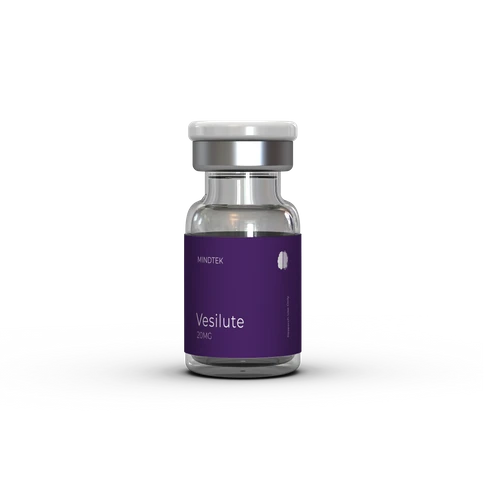
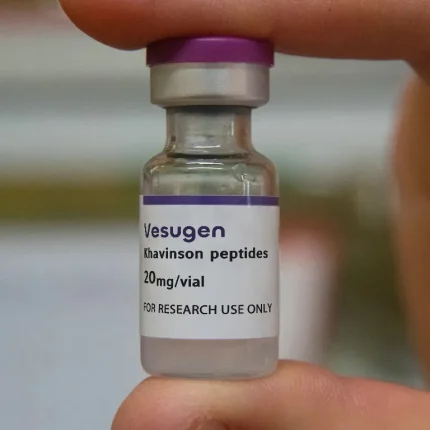
Vesilute Peptide (Bioregulator) | 20mg
$45.00
| Quantity |
(20mg x 10 Vials) |
|---|
Buy vesilute | Vesilute 20mg (Bioregulator)
Peptide bioregulators are rapidly gaining attention in the world of health research and longevity science. One compound that stands out is Vesilute peptide bioregulator, often associated with bladder and urinary system support. If you’re searching for what is vesilute peptide, exploring vesilute benefits, or looking to buy vesilute.
Vesilute is a Khavinson bioregulator peptide with research exploring its role in regulating the urinary tract and prostate gland. Research evidence indicates that Vesilute may help to relieve symptoms associated with bladder and urinary tract dysfunction. Vesilute and other cytomedines have been shown to reduce prostate dysfunction and are thought to act by improving microcirculation in the prostate and by reducing cell proliferation. The latter effect may be due to changes in chromosome density and epigenetic factors, a mechanism of cellular regulation that is common among Khavinson peptides.
Product Guidelines: This PRODUCT IS DESIGNED SOLELY FOR LABORATORY RESEARCH USE. It should only be used for in vitro experiments and laboratory tests. The information provided here is for educational reference only. It's strictly prohibited to administer this product to humans or animals. Only trained and certified professionals should handle this product.
What Is Vesilute Peptide?
Vesilute peptide is a short-chain amino acid complex categorized as a bioregulator peptide, originally studied in the field of cellular therapy and organ-specific support.
It is commonly linked to research on:
- Bladder function
- Urinary tract health
- Cellular regeneration in urogenital tissues
Vesilute Peptide Khavinson Background
Vesilute is often associated with research from Professor Vladimir Khavinson, who pioneered peptide bioregulators aimed at restoring gene expression in aging tissues.
How Does Vesilute Peptide Work?
Understanding vesilute peptide what is it requires a look at its cellular mechanism.
Vesilute works by:
- Interacting with DNA to regulate gene expression
- Supporting protein synthesis in targeted tissues
- Promoting cellular repair and regeneration
Unlike traditional drugs, vesilute peptide bioregulator is believed to stimulate the body’s natural recovery processes, particularly in bladder-related tissues.
Vesilute Peptide Benefits
The growing interest in vesilute peptide benefits comes from its targeted approach to organ health.
Key Vesilute Benefits:
- Supports bladder function and tone
- Promotes urinary tract health
- Encourages tissue regeneration
- May assist with age-related decline in bladder control
Additional Potential Benefits:
- Improved cellular communication
- Enhanced tissue repair
- Support for overall urogenital health
Because of these effects, Vesilute is often explored in longevity and regenerative medicine research.
Vesilute Peptide Dosage
When researching vesilute peptide dosage or vesilute dosage, it’s important to understand that official medical guidelines may vary.
General Usage Insights:
- Often studied in cycles (e.g., 10–30 days)
- Commonly used in low-dose daily protocols
- Typically taken orally in capsule form
Important Notes:
- Dosage depends on research goals or practitioner guidance
- Avoid exceeding recommended amounts
- Consistency is key for observed effects
Always consult a professional before starting any peptide-based regimen.
Vesilute Peptide Side Effects
Understanding vesilute peptide side effects is essential for safe use.
Reported or Possible Side Effects:
- Mild digestive discomfort
- Temporary sensitivity during initial use
- Rare allergic reactions
Safety Considerations:
- Generally well-tolerated in studies
- Limited long-term clinical data
- Effects may vary between individuals
As with any peptide, responsible use and sourcing are critical.
What Is Vesilute Peptide Used For?
Urinary bladder function is tightly related to that of the surrounding tissues, especially the prostate gland tissues. Swelling of prostate tissues may significantly impede the function of the urinary bladder tissues. In the realm of bioregulatory peptides, citomedines with a sequence akin to Vesilut (Glu-Asp) have been suggested to induce intriguing mechanisms of action.
This is particularly noted within the context of experimental models of chronic aseptic inflammation in prostate tissues, which commonly translates to swelling and impaired urinary bladder tissue function. (1) Thus, researchers have posited that Vesilut’s mechanism may potentially be similar to that of related bioregulators and may center on modulating key signs of chronic inflammation at the cellular level.
One primary action observed in the trials was the reduction in swelling in the experimental prostate tissues.(1) This appeared to have been achieved by influencing the fluid dynamics and cellular responses in the inflamed tissue, leading to a decrease in edema or swelling. Another potential aspect of Vesilut’s mechanism, based on the data from related bioregulators, is the attenuation of hyperemia, which refers to an excess of blood in the vessels supplying the prostate gland tissues. This regulation of blood flow may be linked to bioregulator influence on the vascular endothelium and smooth muscle cells, leading to a normalization of blood supply and thus reducing the hyperemic state.
Furthermore, bioregulators related to Vesilut appear to exert a potential role in modulating cellular infiltration, an indicator of immune response and inflammation. By potentially regulating the migration and activity of immune cells, these citomedines may potentially support a balance in the inflammatory response, preventing excessive cellular infiltration. A crucial aspect of the aforementioned peptides related to Vesilut is their potential to block the development of sclerotic processes. Sclerosis, the hardening of tissues, is often considered to result from prolonged inflammation and may lead to the thickening and stiffening of the affected tissue.
Thickening and stiffening of prostate tissues may also significantly impact the normal functionality of urinary bladder tissues. Citomedines may intervene in the pathways that lead to the accumulation of fibrous tissues, thereby mitigating the progression of chronic inflammation towards sclerosis. Ultimately, the authors concluded that the exposure of related bioregulator peptides apparently led to “reduced swelling intensity, hyperaemia, and cellular infiltration, blocked the development of sclerosal processes.” (1)
To summarize what a vesicle peptide is, it is primarily used in research related to:
- Bladder health and function
- Urinary system support
- Anti-aging and tissue regeneration
Its classification as a bioregulator peptide makes it unique compared to conventional treatments.
FAQs About Vesilute Peptide
What is vesilute peptide?
Vesilute is a peptide bioregulator studied for its role in supporting bladder and urinary tract health at the cellular level.
What are vesilute benefits?
Key vesilute benefits include improved bladder function, enhanced tissue repair, and support for urinary health.
What is vesilute peptide dosage?
Typical vesilute dosage varies, but it is often used in low daily amounts over a defined cycle.
Are there vesilute peptide side effects?
Side effects are generally mild and may include digestive discomfort or temporary sensitivity.
Where can I buy vesilute?
You can find vesilute peptide for sale through reputable peptide suppliers and nutraceutical retailers online.
Is vesilute safe?
Current research suggests it is well-tolerated, but more long-term studies are needed.
Related products
Hexarelin | Hexarelin Peptide
Price range: $15.00 through $25.00
HGH Fragment 176-191
$40.00
Humanin | Humanin peptide
$80.00
IGF-1 DES
$65.00
IGF-1 LR3 | IGF-1 LR3 Peptide
$60.00
Ipamorelin
Price range: $18.00 through $55.00
KPV Peptide 5MG
$35.00
Reviews
There are no reviews yet.