


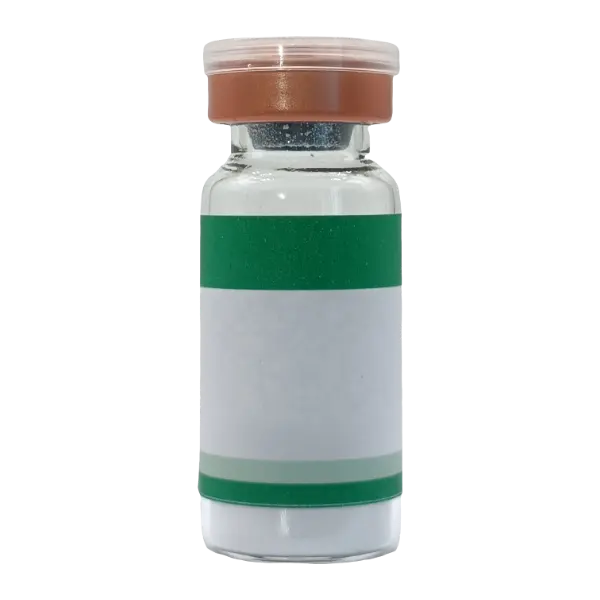
Mod GRF & GHRP-2 Blend
$65.00
| Quantity |
(10mg x 10 Vials) |
|---|
GHRP-2 and MOD GRF 1-29 combo ||Mod GRF 1-29 & GHRP-2 Blend
The Mod GRF & GHRP-2 blend is a synergistic combination of two synthetic peptides designed to stimulate the body’s natural release of growth hormone (GH). These peptides work together to enhance the amplitude and frequency of growth hormone pulses, making this blend a powerful tool in scientific and clinical research related to metabolism, recovery, aging, and body composition.
Some study peptides that could cause the release of growth hormone (hGH) by binding to different receptors on pituitary cells are Modified Growth Hormone Releasing Factor (Mod GRF) (1.29–30) and Growth Hormone Releasing Peptide-6 (GHRP-6).
Mod GRF (1-29) is thought to have the first 29 amino acids of the natural Growth Hormone-Releasing Hormone (GHRH). It looks like the peptide’s positions 2, 8, 15, and 27 have changed.
The substitution of D-alanine for alanine occurs in position 2, whereas the substitution of histidine occurs in position 15, and the substitution of cysteine with N-methylglycine, also known as sarcosine, occurs in position 27. These might make the peptide less likely to be broken down by enzymes and make it last longer.
Lysine, an amino acid that has a positive charge, could help the peptide bind to GHRH receptors by taking the place of asparagine at position 8.
It is thought that the Mod GRF (1-29) peptide still has the potential to connect to GHRH receptors on pituitary cells and start the production of hGH. The structural similarities between met-enkephalins and the synthetic hexapeptide GHRP-6 are remarkable. It is believed that opioid receptors do not work against it. GHRP-6, on the other hand, is a GHS that is thought to turn on ghrelin receptors in pituitary cells, which helps make hGH.
Secretagogue for Growth Hormone The main receptors that respond to ghrelin’s hunger signals and influence the production of hGH are called receptor type 1a (GHS-R1a). These appear to be responsible for the effects of GHRP-6 on hGH secretion. (2) Since GHRP-6 and Mod GRF (1–29) seem to work with different receptors, they may work together to boost the production of hGH in the pituitary gland. Moreover, research suggests that GHRP-6 may interact with additional immune cell receptors, such as CD36.
Mod GRF & GHRP-2 Blend | Buy Peptides Online
The GHRP-2 & Mod GRF (1-29) blend is a highly synergistic combination of two potent peptides known for their role in stimulating natural growth hormone (GH) release. This scientifically balanced formulation is designed for research applications exploring hormonal modulation, anti-aging, recovery, and body composition effects.
-
GHRP-2 (Growth Hormone Releasing Peptide-2) is a ghrelin mimetic that stimulates the pituitary gland to secrete growth hormone while also increasing appetite and promoting deep sleep.
-
Mod GRF (1-29), also known as CJC-1295 without DAC, is a synthetic analogue of GHRH (Growth Hormone Releasing Hormone) that enhances the body’s natural ability to release growth hormone in a pulsatile manner.
When combined, these two peptides produce a potent, amplified GH pulse that closely mimics the body’s natural secretion pattern. This makes the blend highly suitable for research into muscle growth, fat metabolism, recovery, and overall endocrine health.
Mechanisms of Action
Researchers think that Modified GRF 1-29 and GHRP-2 make pituitary somatotroph cells make GH. They might activate different receptors for this. [2,3] Modified GRF 1-29 might interact with the GHRH receptors on the anterior pituitary somatotroph cells. This interaction may set off a chain of events inside the cell that leads to the production of growth hormone. Modified GRF 1-29 might turn on signaling pathways inside cells. One way that adenylyl cyclase can change ATP into cAMP is by using an enzyme.
Higher levels of cAMP may turn on protein kinase A (PKA), which adds a phosphate group to proteins like voltage-dependent calcium channels in cell membranes. Phosphorylation and opening of these channels may allow calcium ions to enter somatotropic cells. An elevation in intracellular calcium may facilitate the release of growth hormone. Moreover, elevated cellular calcium concentrations may induce secretory vesicles to discharge growth hormone into the circulatory system.
Some scientists think that GHRP-2 interacts with and turns on the ghrelin receptor, GHS-R1a. [4] This interaction can cause the release of growth hormone. GHRP-2 is a synthetic hexapeptide that may have a strong attraction to the GHS-R1a receptor. When GHRP-2 binds to the receptor, it may change its form, which turns it on. GHRP-2’s interaction with GHS-R1a may start a number of signaling pathways inside cells.
The phospholipase C (PLC) pathway is one of these. It might make inositol trisphosphate (IP3) and diacylglycerol. IP3 might then let calcium out of cells, which would raise calcium levels. It is considered that higher levels of calcium cause the pituitary gland to release more growth hormone.
Modified GRF (1-29) and GHRP-6 Mix: Their Interaction with Adipocytes
The study of the Mod GRF and GHRP-2 blend shows that these two peptides may change where fat tissue is by changing how growth hormone is released. People think that growth hormone can help break down fat, especially fat around the stomach. Kopchick et al. assert that GH affects adipose tissue in a depot-specific manner and modifies many characteristics of adipose tissue, such as aging, adipocyte subpopulations, and fibrosis, all of which may effect lipolysis. (10) This decision might stem from the greater number of growth hormone receptors present in visceral adipocytes compared to subcutaneous fat cell bulk.
Dehkhoda et al. lead a team of researchers who found that growth hormone may turn on enzymes like hormone-sensitive lipase (HSL) and adipose triglyceride lipase (ATGL) when it attaches to these receptors. These enzymes help convert stored triglycerides into glycerol and free fatty acids. (11) The growth hormone may also start the expression of genes that help move fat by turning on signaling pathways like JAK/STAT.
This process might speed up lipolysis and lower the number of fat cells in the abdomen. So, Mod GRF (1-29) and GHRP-6 may help the body change its metabolism in a way that lowers the amount of belly fat cells by making more growth hormone available. It is important to recognize that in certain studies, as central fat depots are degraded, there may be a translocation of adipose tissue from visceral to subcutaneous sites, rather than a reduction in overall fat cell content.
FAQ :
Q: What is the main purpose of the GHRP-2 & Mod GRF 1-29 blend?
A: The blend is designed to stimulate natural growth hormone release for research purposes, mimicking the body’s physiological GH pulses.
Q: How does this blend compare to using each peptide separately?
A: When used together, GHRP-2 and Mod GRF (1-29) work synergistically to create a stronger and more sustained GH pulse than when used alone.
Q: Is this product safe for human use?
A: No. This product is strictly intended for laboratory research only and is not approved for human consumption.
Where To Buy Mod GRF & GHRP-29 Blend | Buy mod grf
When buying Mod GRF (1-29) and GHRP-2 combination, it’s important to choose a provider that can promise high purity, accurate dosing, and dependable lab tested peptides. Researchers utilize this peptide combination a lot to study things like growth hormone release, tissue regeneration, metabolism, and anti-aging. But because peptides are sensitive, it’s really important to get them from a reliable source.
Important Things to Think About When Buying Mod GRF and GHRP-2:
Purity and Testing: Only buy from suppliers like us that offer independent third-party lab testing and guarantee at least 98% purity.
Storage and Handling: Make sure the suppliers you choose ship peptides lyophilized (freeze-dried) and in the right cold chain packaging to keep them stable.
For research only: The seller should make it clear that the peptide is solely for use in the lab and not on people. This shows that they respect the rules and morals.
To ensure accurate and ethical results in your research, only purchase Mod GRF & GHRP-2 blends from established peptide suppliers known for quality assurance and scientific integrity. Your research deserves the best tools—don’t compromise on purity or professionalism.
Related products
Humanin | Humanin peptide
$80.00
IGF-1 LR3 (Receptor Grade)
$160.00
Ipamorelin
Price range: $18.00 through $55.00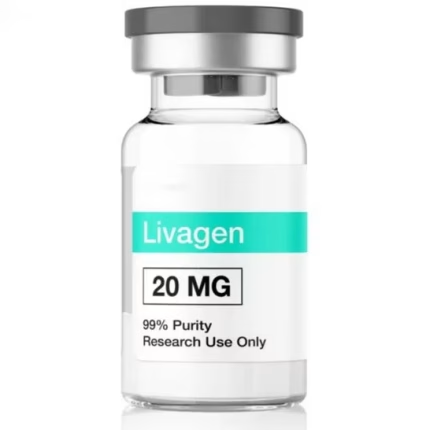
Livagen Peptide | Livagen Bioregulator Peptide
$45.00
Matrixyl (Topical)
$145.00
Mod GRF 1-29 (CJC-1295 no DAC)
Price range: $310.00 through $605.00
Mod GRF, Hexarelin (Blend)
$65.00
Reviews
There are no reviews yet.